Baldur's Gate is the D&D city everyone knows. Parties end up in a tavern ten times as often
By Jordan Cole, founder of LoreifyPublished
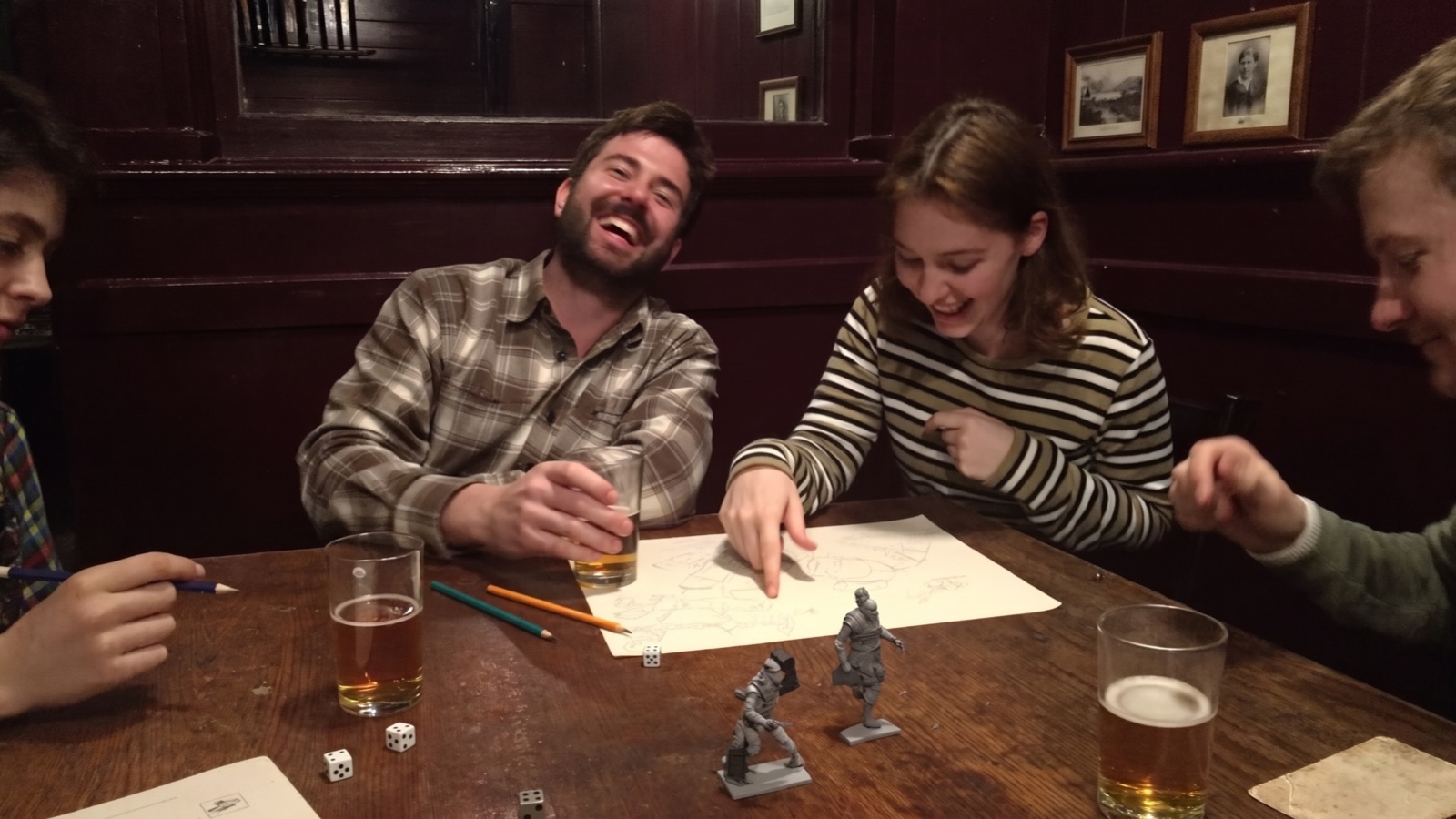
Baldur's Gate may be the best-known city in Dungeons & Dragons: it is also the title of a hit video game. From November 2025 through October 2026, it came up as a place in the session notes of 63 campaigns, out of 2,179 recorded with Loreify. A tavern or an inn came up in 859. "Ten times as often" means just that: more than ten times as many campaigns, however the city is counted: by its name, with the places tied to it, or with the notes' one-line place descriptions included.
It is not even the published city those campaigns named most. That was Waterdeep, in 105, level with the small town of Phandalin (104). One caution: a place in the notes is where the notes read a session as happening, which is sometimes somewhere the party only talked about, and these are tables that record their games, not the whole hobby.
The places the notes named most

Among published places, counting the Feywild and the Underdark, which any world can borrow, Waterdeep (105 campaigns) and Phandalin (104), the town from the starter adventure Lost Mine of Phandelver, are level at the top. Then come Neverwinter (95), the Feywild (85), the Underdark (78), Barovia (76) and Baldur's Gate (63).
Baldur's Gate trailed Waterdeep however we counted: by name (105 to 63), with each city and the places tied to it, or with the notes' one-line place descriptions included. That is no verdict on the video game: we have no before and after to compare.
The order at the top is not solid. Count the descriptions too and the Feywild (148) and the Underdark (138) pass Waterdeep and Phandalin. What does not move is the scale: no published place reached one campaign in ten.
The tavern did, and not on borrowed fame: in 773 of the 859 campaigns it was a tavern or inn that is not on our list of published places. Taverns and inns came up in more campaigns than temples, churches and shrines (811), forests and woods (734) or caves (636). Of the kinds of place we grouped, only a catch-all of dwellings, from houses and manors to cabins and huts, came up in more (970). Rooms and halls did too, but those are parts of a place. And a tavern is a stop, not a home: the notes named one in about one session in eight.
Published places, and the rest
We matched 634 of the 2,179 campaigns (29%) to a named place from a published D&D setting or adventure, the planes and the Underdark aside. Among the 964 with five or more sessions, which have had longer to name somewhere, the share was 39%.
| The notes named | All 2,179 campaigns | The 964 with five or more sessions |
|---|---|---|
| A tavern or an inn | 39.4% | 60.9% |
| A place from a published D&D setting or adventure | 29.1% | 38.6% |
| The same, or a plane or the Underdark | 36.2% | 50.6% |
| A published place on the stricter list | 26.5% | 35.5% |
| Nothing on our list of published places and planes | 63.8% | 49.4% |
Treat that share as rough. Our list misses some published names and holds others an invented world could share, such as the Sleeping Giant or the High Forest; the stricter list drops those. And the unmatched campaigns are not "homebrew": 61 of the 2,179 campaigns matched our short list of other publishers' worlds and other games, and notes that say only "the tavern" match nothing, wherever the campaign is set.
This is not a news story, but the shelf of published worlds did just get longer. D&D: World of Warcraft, which the trade press calls the first release in a line named D&D Universes Beyond, came out on November 17, 2026, after early access for D&D Beyond's Master Tier subscribers from November 3. Our numbers stop on October 31, so they cannot show what the book changes. In notes recorded before early access opened, Azeroth did not reach our 25-campaign reporting floor.
What a Dungeon Master can take from it
A campaign off the published map is ordinary. If your notes would show no place from a book, the same was true of about half of the longer campaigns we could measure.
Among published settings, two do most of the work. The Forgotten Realms came up in 414 campaigns and Ravenloft in 105, far ahead of Exandria (44) and Greyhawk (38). Dragonlance did not reach the floor. Of the best-known places, Barovia is the one campaigns stay in. With its Curse of Strahd sites it averaged 6.7 sessions naming it per campaign, against 3.1 for Waterdeep and 2.6 for Baldur's Gate, each with its own sites. Curse of Strahd keeps a party in one valley by design, so this says as much about the adventure as the place.
Either way, prepare the tavern. The notes named one in six of every ten longer campaigns. If yours needs one by game night, there is a free tavern generator for that.
To check your own table, list the places from your last five sessions and mark the ones that came from a book.
How we checked the numbers
What was counted. Loreify writes notes from a recording of each session, and the notes list the places where the session was read as happening. We counted campaigns, not sessions, because one long campaign would otherwise swamp the rest. A place in the notes can be a place the party only talked about. These are counts of what the notes recorded, not of everything that happened at the table.
When. Sessions recorded from November 1, 2025 to October 31, 2026 (UTC). The Azeroth check alone covers every session with notes before November 3, 2026. Nothing after those dates is shown.
Who. Campaigns recorded with Loreify: mostly English-speaking, and mostly but not only playing D&D 5th edition. No field says which game a campaign plays. This is not a census of the hobby. In the window, 2,258 campaigns had a completed session with notes. We left out the 79 whose notes named no place, which leaves 2,179 campaigns and 15,580 sessions. Those campaigns belong to 1,408 accounts, so "table" here means a campaign, and one group can run several. "Five or more sessions" means five or more sessions whose notes named a place.
The list of published places. We wrote it ourselves from the settings and adventures published for D&D: the Forgotten Realms and its Sword Coast adventures, Ravenloft, Eberron, Greyhawk, Exandria, Dragonlance, the Magic: The Gathering worlds and the anthology books, about six hundred names in all. A name counts when it appears as a whole word in the place name. "Barovia" covers the valley and the village. "Ravenloft" is counted as the castle. "Sigil" counts only when it is used as the name of a place, not as the ordinary word. The planes and the Underdark are counted apart, because any world can borrow them. The stricter list drops nearly a third of the names, the ones made of ordinary words; it matches 578 campaigns. A different list would give a different share.
Cities and the places tied to them. A city's published inns, districts and buildings, such as the Yawning Portal in Waterdeep. For Baldur's Gate the list also holds places outside the walls that appear in the video game, which can only raise its count. All three ways of counting the city gave the tavern more than ten to one. The sessions-per-campaign figures are averages, and long campaigns pull an average up: the middle campaign named Barovia in 3 sessions, Waterdeep in 1 and Baldur's Gate in 2.
The tavern. "Tavern" or "inn" as a whole word in the place name. Plain "tavern" was also the commonest single place name in the notes, in 182 campaigns. Adding pubs, bars and alehouses raises the tavern count to 916. Rooms, halls and chambers came up in 1,028 campaigns.
The reporting floor. A number must describe at least 100 sessions from at least 50 campaigns, and a named place must appear in at least 25 campaigns. Anything smaller is never given a count.