For every D&D party fighting a Stranger Things monster, six are stuck with goblins
By Jordan Cole, founder of LoreifyPublished
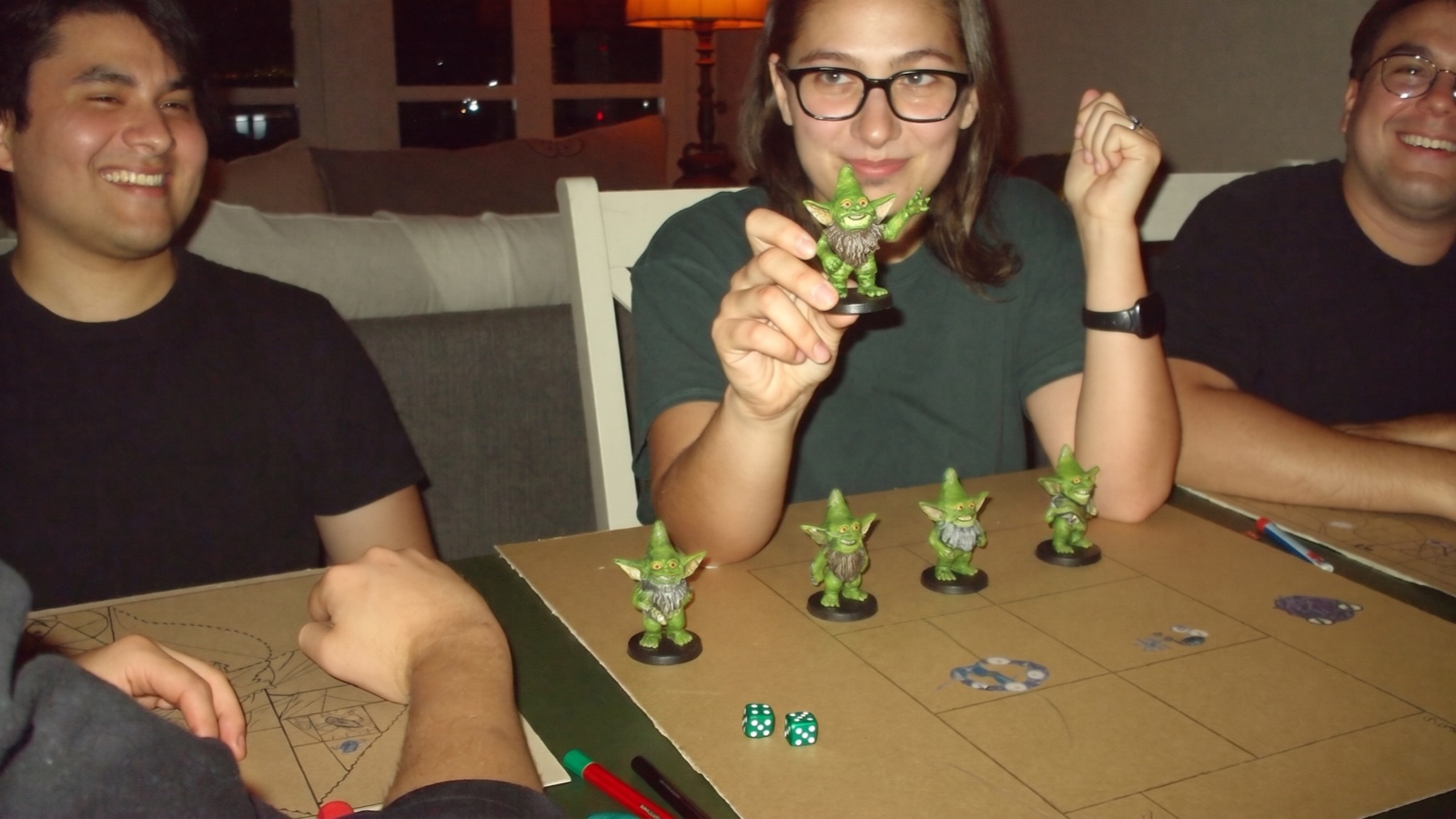
Stranger Things named its villains after three Dungeons & Dragons monsters: the Demogorgon, the mind flayer and Vecna. At the tables we could measure, all three together come up as fought less often than owlbears. From November 20, 2025 to November 19, 2026, the notes from 1,927 campaigns recorded with Loreify named at least one enemy the party fought. Goblins came up in the notes as fought in 325 of them, about one in six. The Demogorgon, Vecna and the mind flayer, counted together, came up in 51, about one in 38. That is more than six goblin campaigns for every one with any of the three. Guards, not monsters, narrowly top the list.
These are counts of what Loreify's session notes recorded, at tables that record their games. We cannot see which game each table plays, so it is not a census of the hobby. The show's final season aired inside that window, in late 2025, and we draw no link between it and the numbers. Its D&D box, Welcome to the Hellfire Club, is a Kidult Toy of the Year finalist in the 2027 Toy of the Year awards, named on November 7, with the public People's Choice vote open until January 6, 2027.

The top of the list is not a monster
On the plain count it is the guard. Guards came up as fought in 342 campaigns, just ahead of goblins. That counts any name with the word guard, goblin guards and guard dogs included. Leave those to their own kind and guards fall to 285, third behind goblins and zombies.
Other people are as common an enemy as any monster. Enemies named as people, such as guards, bandits, cultists, mages, soldiers and assassins, came up in at least 842 campaigns, more than four in ten. That is the same range as the undead and beasts.
Goblins are the most-fought monster on our list, but only just. Zombies are close behind, then skeletons. Then a tight pack of swarms, spiders, wolves and dragons, each in about one campaign in eight.
Is the goblin lead the famous starter adventure, the one that opens with a goblin ambush? Only partly. About one in six goblin campaigns also named Phandalin or another place from Lost Mine of Phandelver. Place names can be missed, so the true share could be higher, but most goblin campaigns were not visibly running it.
The famous monsters rarely come up, with one exception
The three Stranger Things monsters came up as fought in 51 campaigns, under 3%. The mind flayer is the most common of the three and the only one to pass our 25-campaign reporting floor by itself. The Demogorgon and Vecna each fell short of it, so we give no count for either. Owlbears, at 61 campaigns, beat all three combined. Beholders (52) and liches (31) sit in the same corner.
One fair objection: in the published rules the Demogorgon and Vecna are built for the highest levels of play, and most campaigns have only a few sessions with a monster in our window. Half had three or fewer. A table rarely fights its final boss three sessions in.
So we looked at the 545 campaigns with ten or more recorded sessions in the year. Guards came up in nearly four in ten of them, zombies in three in ten and goblins in more than a quarter. The Stranger Things three rose faster than goblins did, to about one in 16, and owlbears were level with them there. Goblins still led them by more than four to one. Ten sessions is rarely enough to reach the levels those villains are written for, so this narrows the objection without settling it.
The exception is the monster in the game's name. A dragon came up as fought in about one campaign in eight, and in roughly one in four of the long-running ones. That counts dragons of any size, from wyrmlings up, and leaves out dragonborn characters and dragon turtles. The true figure could be a little higher or lower: a dragon recorded only under its own name is missed, and not every name with "dragon" in it is a dragon.
Strahd, at least, seems to work as a destination. Barovia and other places from Curse of Strahd came up in the notes of 94 campaigns. Strahd himself, as something the party fought, did not reach our reporting floor.
What to take to your own table
If your campaign has been guards, goblins, skeletons, wolves and a gang of cultists, you are in good company. No single enemy came up in even one campaign in five, but those are the ones at the top of the list. The plain fights are the ones your players are most likely to have, so they are worth your preparation. Our goblin guide covers how many to use at level 1 and how their escape trick works.
Are the famous monsters worth the build-up? The notes cannot say whether a fight was good, only how often one was recorded. What they do show is that fighting Vecna or a mind flayer is something the notes recorded at few of these tables in the sessions they logged this year, so it will not feel routine. If you want your players to face something they have heard of, a dragon is the realistic promise.
How we checked the numbers
What was counted. Completed sessions recorded with Loreify from November 20, 2025 to November 19, 2026 (UTC), where the session notes named at least one enemy the party fought: 11,353 sessions from 1,927 campaigns. That is 86% of the 2,252 campaigns with notes in the window. The campaigns belong to 1,263 accounts, and 267 of the campaigns are an account's default folder, which can hold more than one game. Nothing was filtered for test campaigns. The evidence ends on November 19, 2026.
The unit is the campaign. An enemy counts once per campaign, however many sessions it came up in. Every enemy share is a share of those 1,927 campaigns, or of the 545 with ten or more completed sessions in the window.
How names were grouped. We matched the enemy names in the notes against a list of official names and counted only our own labels. Plurals and spellings were merged. A name counts for every label in it. "Goblins" leaves out hobgoblins. "Wolves" leaves out werewolves. "Skeletons" includes anything called skeletal; the word skeleton alone gives 229 campaigns, below swarms, spiders, wolves and dragons. Captains (150 campaigns) are a rank and not a kind of enemy, so they are in the people group and not ranked by themselves. The people group leaves out any name that also has a creature word from our list (goblin, skeleton, dog and about a hundred more); with those names it is 958 campaigns. Undead by name came up in 742.
The Stranger Things three. We counted the monster itself, not a follower. Counting names that only mention one of them changes no comparison in this article. In long campaigns the group and owlbears each came up in about 6% of the 545.
Dragons. The count by name is 232 campaigns (12%). Counting only those the notes also typed as a dragon gives 186 (10%); adding creatures typed as a dragon under another name gives 273 (14%). In long campaigns the range is 21% to 30%.
Starter adventure. Of the 325 goblin campaigns, 54 also named a place from Lost Mine of Phandelver.
Creature types. The notes give each enemy a free-text type. Only 65% of entries carry one of the fourteen official types, so we did not rank by type. As lower readings, 61% of campaigns had an enemy typed humanoid or goblinoid, 47% one typed undead and 40% one typed beast. The people group (at least 43%) sits in that range, which is why we do not call people the single most common kind of enemy.
Limits. These are the notes' reading of a transcript, not a count of what happened. An enemy met but not fought is not here. The tables are ones that record their games with Loreify. No field says which game system a table plays. A campaign that has few sessions in the window has not necessarily ended.
Reporting floor. A named enemy is only reported if it came up in at least 25 campaigns. Anything under that gets no count. Totals only; no table is identified.